
Golden Shot Conversations
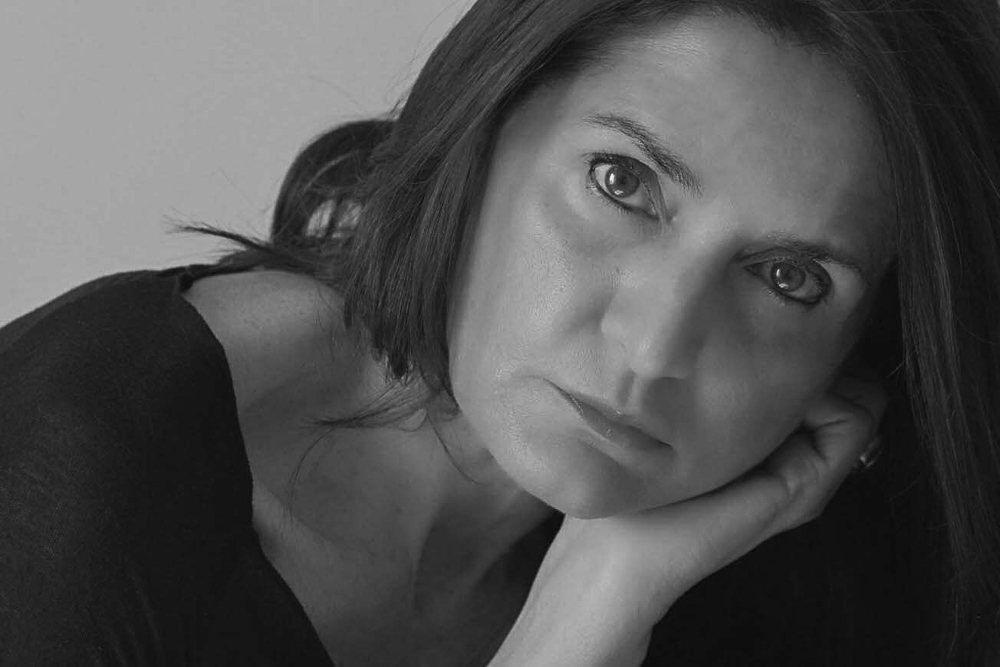
Paola Francesca Barone
I am Paola Francesca Barone, a conceptual photographer and teacher of classical languages at a Liceo Classico in Naples. My humanistic formation – Greek, Latin, Sanskrit, philosophy – is not a neutral backdrop to my photographic practice, it is its root. I began photographing through my father’s camera, a vintage Zeiss, moving for years between architecture, landscape and minimalism. From 2019, photography became self-directed and conceptual, centred on the body as a surface of philosophical inquiry. It was a natural transition, because as a woman the body was already implicit in everything I photographed, it simply had not yet entered the frame.
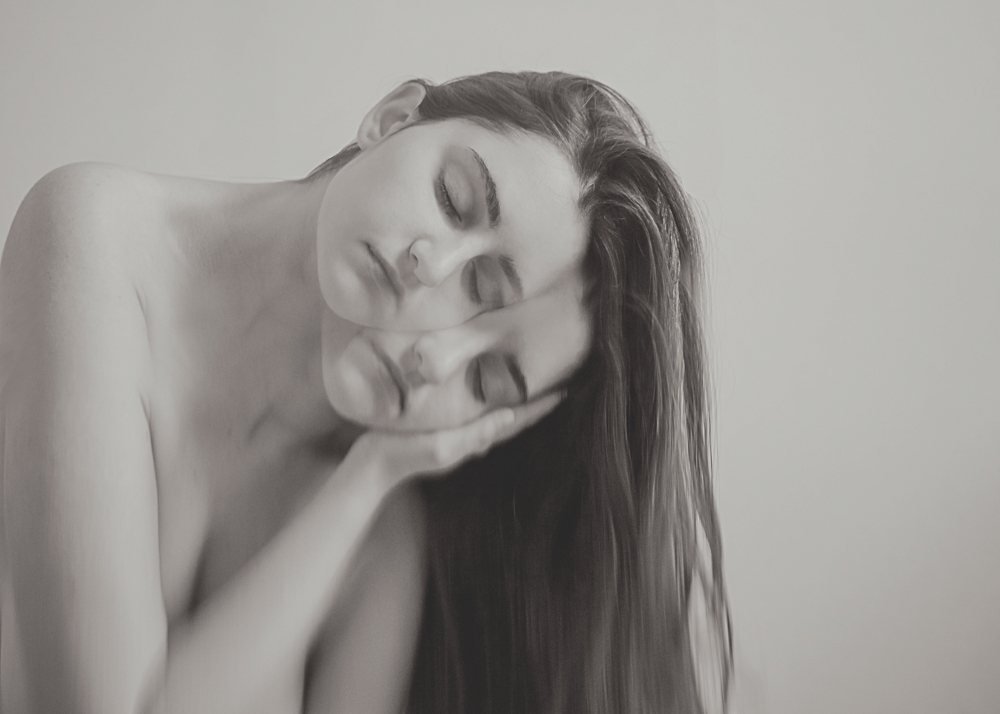
L’abbraccio mancato is the portrait of a young woman, made in my home studio with the same silent care that characterises all of my practice. The image grows out of a prolonged observation, that of a mother and a teacher who lives daily alongside Generation Z and perceives their condition with growing unease. It is the visual translation of a cultural diagnosis, the attempt to give photographic form to something that can be seen but struggles to be said.
The central idea is that of a reversed Oedipus: adults cannot stop being children, and in their inability to assume the symbolic responsibility of word and care, they abandon new generations to a world without reference points. The Foucauldian perspective on control has been overturned, discipline has dissolved into abandonment, and Generation Z finds itself in a time of mass freedom in which isolation grows alongside conformism. They are orphans without being so: parents exist, remain visible, and yet something essential in their presence has withdrawn.
The image carries with it an invitation to look honestly at a structural fracture in our society. Hyperedonist ideology has dismissed educational discourse by labelling it repressive, depriving new generations of support, orientation and real adult presence. The emotion running through the image is far from any nostalgia for the father-master or the father-totem. In the time of the evaporation of the father, an ambivalent space opens up, one in which the drive toward a jouissance that can become lethal is accompanied by an unprecedented possibility of reinventing the relationships between self and other. L’abbraccio mancato is an open question, as much as it is a loss.
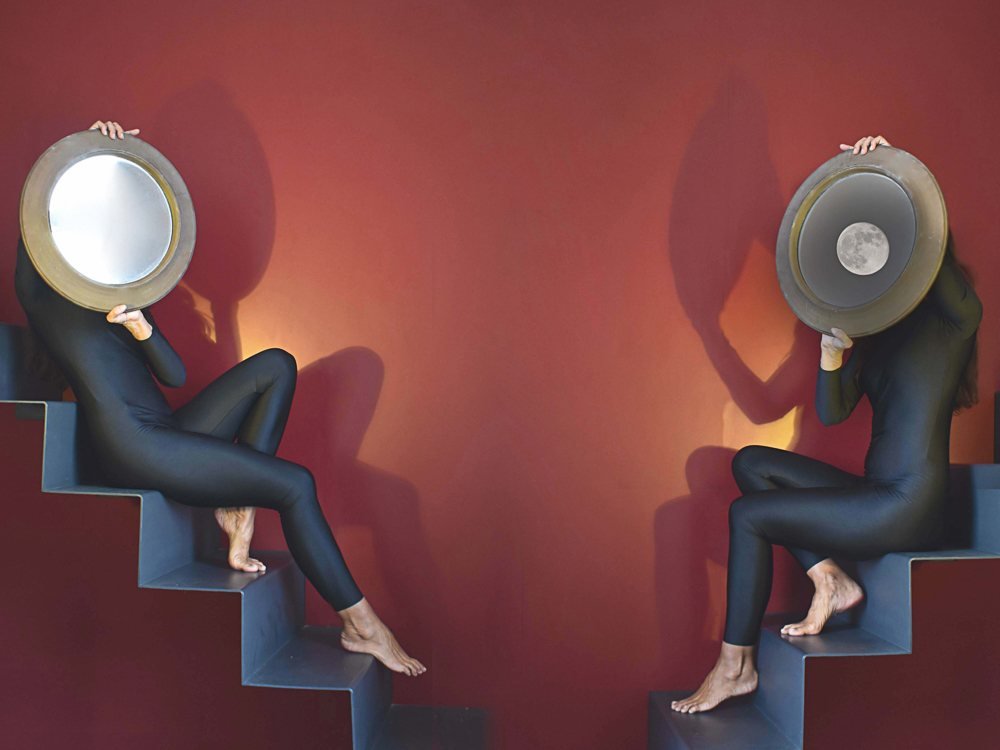
The greatest difficulty in conceptual portrait photography is the necessary distance between the intensity of the bond with the subject and the lucidity of vision. Photographing a young woman I know deeply meant traversing that affective proximity without allowing myself to be absorbed by it, keeping active the critical perspective the image demanded. The body had to say something true about the condition of an entire generation, while remaining faithful to the singularity of that one person. Finding the balance between the particular and the general, between care and conceptual rigour, was the most genuine challenge.
My work moves at the intersection of phenomenology of the body, history of the image and conceptual inquiry. I am drawn to what Aby Warburg called Nachleben, the survival of forms, the way certain postures and gestures return to take on flesh across the centuries. Ortega y Gasset spoke of intracuerpo, the body lived from within; it is from this perspective that I photograph, inhabiting the body before the lens rather than representing it. Style is the result of this tension between conceptual density and emotional quality, between the philosophical root of the project and its necessity to remain image.
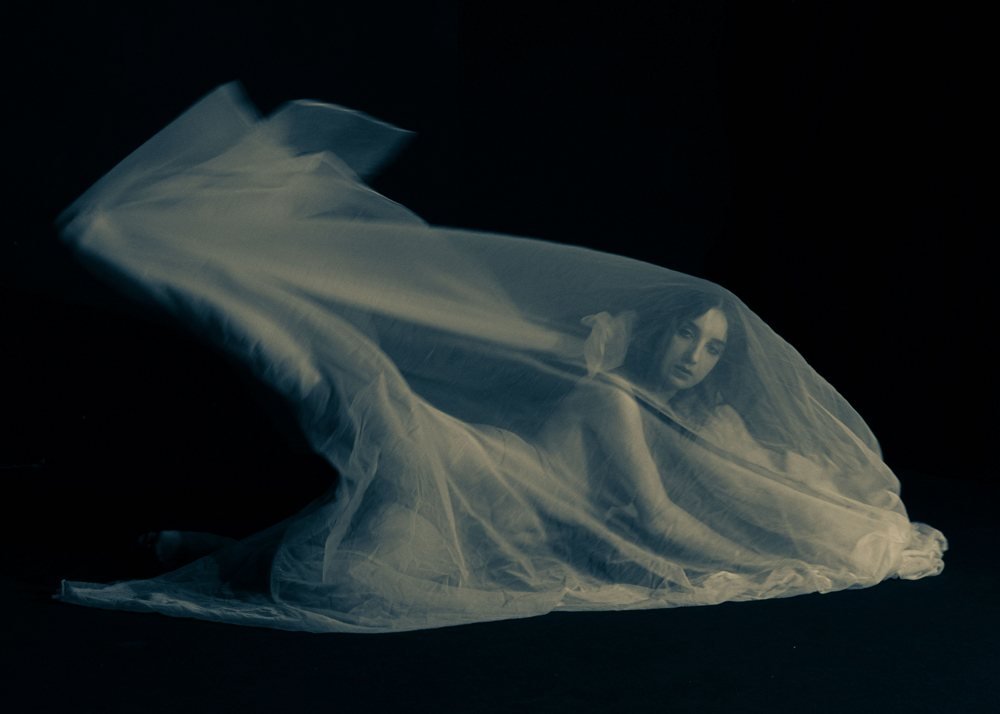
The body, its temporality, its vulnerability, its relationship with memory, with absence and with the other. I am drawn to the boundary between what is visible and what resists vision, between presence and trace, between the completed gesture and the one that remains suspended. I often work with the concept of threshold, that liminal space in which meaning is not yet or is no longer defined. In parallel, the social dimension of the body questions me deeply: the condition of new generations, the erosion of structures of care and cultural transmission, the way in which contemporary hyperedonism has altered the relationships between adults and children. Anthropology of the embodied self and cultural critique are, in my work, two movements of the same inquiry.
My references are wide-ranging and not all photographic. Aby Warburg and his Mnemosyne Atlas taught me to read images as living organisms that move through time. Merleau-Ponty offered me the philosophical foundation for thinking of the body as the origin of perception. Ortega y Gasset, through the concept of intracuerpo, made visible to me what it means to photograph from within. Georges Didi-Huberman showed me how an image can be a site of survival and anachronism.
Among photographers, the formal rigour of Irving Penn and his capacity to isolate a subject until it becomes pure form remain a constant reference. Edward Weston taught me that the body can become landscape, geometry, abstraction without losing its vital charge. André Kertész gave me a sense of how light and angle can transform the real into something that already belongs to dream. Francesca Woodman and Jo Spence, each in her own way, opened the path toward a use of the female body that is at once subjective inquiry and critical declaration, a territory in which I recognise myself deeply.
It is a recognition that goes beyond personal satisfaction, because it confirms that a body of work born in solitude, built on theoretical references that are not immediately accessible, is able to communicate across cultural and linguistic boundaries. For someone who works as I do, entirely autonomously, without institutional intermediaries, international awards are also instruments of legitimation that make dialogue with the art world possible and open spaces of visibility that would otherwise be difficult to reach.
To know one’s own work deeply before presenting it, not only visually but conceptually. A strong image, lacking awareness of its own poetics, remains mute before an international jury. Equally important is to choose contexts with care, because every submission is also a declaration of belonging to a particular ecosystem of the image; not everything that is open is suitable, and not everything that is prestigious is relevant to one’s own research.
More conversations
Explore more interviews
 ARTIST INTERVIEWS
Thomas de Franzoni
Flamingos emerging from a misty Italian lagoon give The Gathering its quiet balance between solitude and togetherness. The conversation explores patient observation, black-and-white minimalism and the space a simple composition leaves for personal interpretation.
Read more ARTIST INTERVIEWS
DON HURZELER
Lava meeting the ocean and a wildebeest leaping into a river capture two very different forces of nature. Both photographs depend on preparation and persistence, with the final image decided by a moment no photographer can control.
Read more ARTIST INTERVIEWS
MATEO BORRERO
A Ticuna man beside an ancient ceiba tree brings the Amazon’s falling water levels into focus in Water Line. The conversation explores documentary travel, environmental change and the communities whose lives are closely connected to the river.
Read more